.png)
Over the past few years, marketplaces have become one of the most popular online sales channels. For many entrepreneurs, they have served as the first step in developing their e-commerce business.
Shoppers are already accustomed to ordering products from large retail platforms, and businesses have gained the ability to start selling quickly without building their own website or mobile app.
However, with increasing competition, more and more companies are starting to consider another question.
How can you stop depending on third-party platforms?
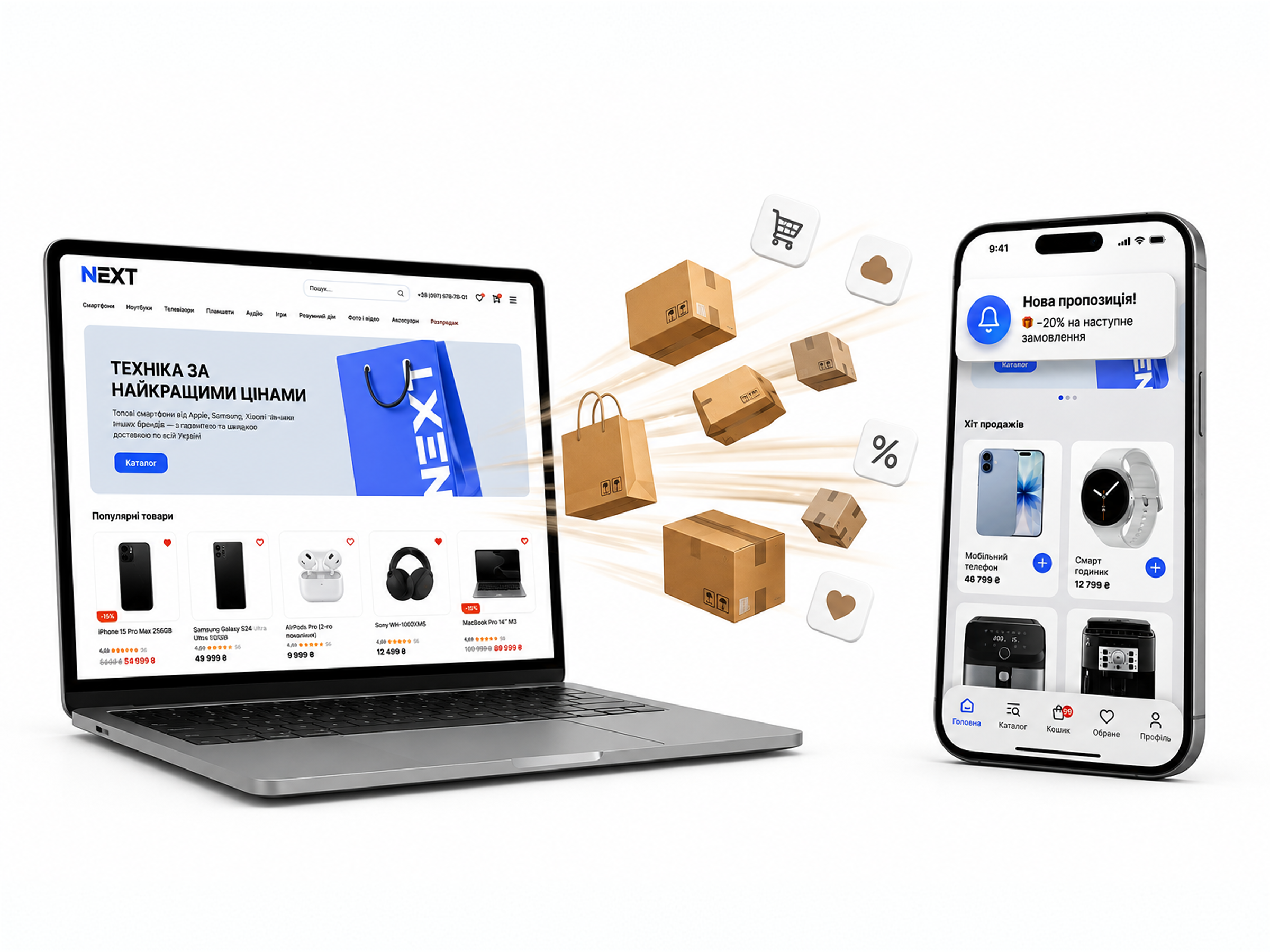
That is why, in 2026, one of the key e-commerce trends is the development of proprietary digital sales channels — a branded website and a mobile app.
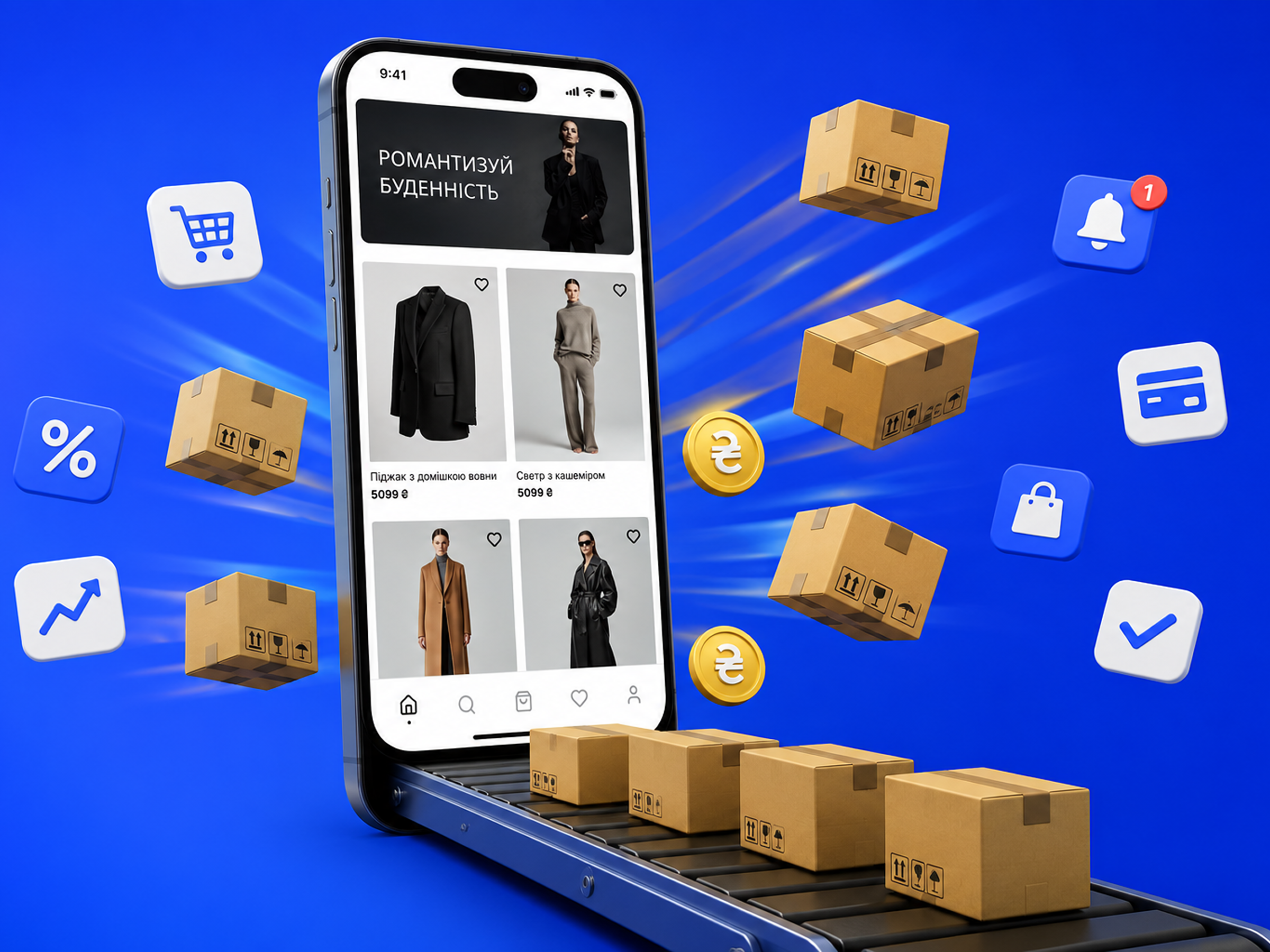
The platform Biksico helps companies quickly launch their own mobile apps using a subscription model, allowing businesses to work directly with their customers.
You can learn more about the solution on our website:
Marketplaces are great for getting started.
They already have a large audience, ready-made infrastructure, and a well-known brand.
However, along with the benefits, businesses also face certain limitations.
For example:
In practice, customers often remember the marketplace rather than the store itself.
As a result, sellers have to fight for customer attention all over again every time.
When a customer installs a store's mobile app, the company gains a direct channel for interaction.
There is no longer any need to wait for a customer to accidentally find your product among hundreds of competitors.
Your brand is always right there on the customer's smartphone.
This opens up new opportunities:
That is why many successful online stores use marketplaces only as an additional sales channel, while focusing primarily on developing their own digital ecosystem.
One of the main advantages of a mobile app is brand development.
When a customer regularly sees your company logo on their smartphone screen, your brand gradually becomes recognizable.
The customer no longer associates the purchase solely with the marketplace.
They begin to interact directly with your store.
This is exactly what allows you to build long-term loyalty.
Acquiring a new customer is always more expensive than retaining an existing one.
That is why modern e-commerce is increasingly focused on repeat purchases.
Through a mobile app, the customer can:
For the buyer, this is much more convenient than searching for the store among dozens of competitors every time.
One feature that cannot be fully implemented through a marketplace is push notifications.
The company can notify the customer about:
These messages allow you to maintain regular contact with customers without the need to constantly run expensive advertising campaigns.
With its own app, a business can build its own loyalty system.
Customers gain access to:
This motivates customers to return specifically to your store.
Many companies delay launching a mobile app due to the high costs involved.
Full-scale development often includes:
All of this requires significant financial investment.
Especially if the company is just beginning to scale.
That is why more and more businesses are switching to ready-made solutions.
The platform is already built.
It just needs to be adapted to the company's brand.
That is exactly how Biksicoworks.
The company offers the opportunity to rent a ready-made mobile application for various types of businesses without the need to build a product from scratch.
You can explore the features on our website:
The solution is suitable for:
Practically any business that relies on repeat sales can benefit from having its own mobile app.
The most effective model today combines several channels at once.
For example:
In this way, the marketplace becomes a tool for acquiring new customers, while the mobile app serves as a tool for retention and increasing customer lifetime value (LTV).
The platform provides:
Everything is ready to use.
There is no need to spend months on development or build your own IT department.
You can learn more about the platform here:
Marketplaces remain an important part of modern e-commerce, but they should not be your only sales channel.
Companies that develop their own digital products gain more control over customer interactions, can build effective loyalty programs, increase repeat sales, and gradually build a strong brand.
That is why more and more online stores are choosing their own mobile apps as the foundation of their digital strategy.
Biksico helps implement this approach without long and expensive custom development by providing ready-made branded mobile apps on a subscription basis.
You can find out more on our official website:
All News